YouTube on the Big Screen: Why the Living Room Revolution Changes Everything for Indie Filmmakers
In February 2025, YouTube CEO Neal Mohan made an announcement that should make every indie filmmaker pay attention: TV has now overtaken mobile as the primary device for YouTube viewing in the United States.
This isn't just a statistic. It's a fundamental shift in how audiences consume content—and it represents the biggest opportunity for independent filmmakers in a generation.
The Numbers Are Staggering
Let's look at what's actually happening:
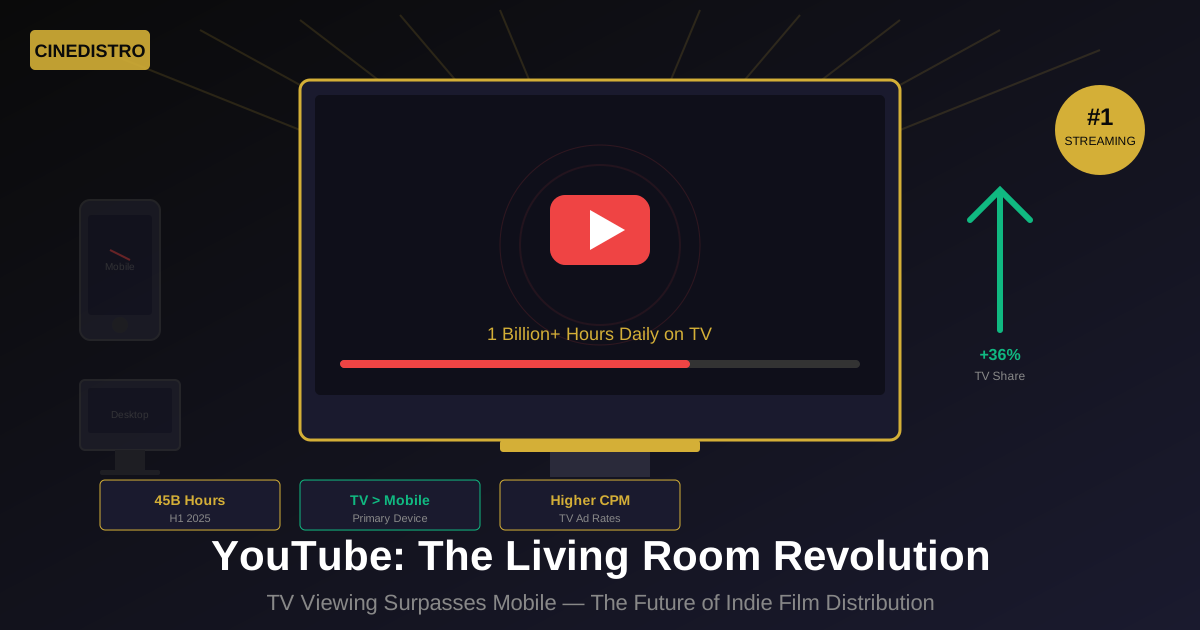
- 1 billion+ hours of YouTube content watched on TV screens daily in the US
- 45 billion viewing hours in the first half of 2025 alone
- 36% of all YouTube viewing now happens on TV screens
- YouTube has been #1 in streaming watch time for the past two years according to Nielsen
- 400 million hours of podcasts watched monthly on TVs
This means YouTube isn't just competing with TikTok and Instagram anymore. It's competing directly with Netflix, Amazon Prime, and traditional television. And it's winning.
Why This Matters for Indie Filmmakers
The shift to TV viewing fundamentally changes the YouTube experience. When viewers watch on a 55" screen instead of a 6" phone, they're in a different mindset:
Longer Watch Times: Living room viewing means longer sessions. Viewers aren't scrolling during their commute—they're settling in for entertainment. This is perfect for feature-length content.
Higher Engagement: TV viewers complete content at higher rates than mobile viewers. For filmmakers earning ad revenue, this translates directly to better earnings.
Premium Ad Rates: Advertisers pay more for TV impressions than mobile. As YouTube's connected TV viewership grows, so do CPM rates for quality content.
Legitimacy: Your film playing on someone's living room TV has the same impact as traditional broadcast. The distinction between "YouTube video" and "real TV" is disappearing.
What YouTube Is Doing
YouTube isn't treating this shift passively. The platform is actively building features for the TV experience:
Second-Screen Experience: Users can now interact with videos using their phones while watching on TV—leaving comments, shopping, and engaging with creators.
TV-Specific Ad Formats: New advertising options like QR codes and pause ads are being introduced specifically for the living room experience.
Watch With: A new feature letting creators provide live commentary and reactions to content, tested first with NFL games.
Enhanced Discovery: YouTube is improving recommendations specifically for TV interfaces, helping viewers find content they'll want to watch for longer periods.
The Transparency Advantage
Unlike traditional streaming platforms, YouTube provides filmmakers with unprecedented transparency:
Real-Time Analytics: See exactly how many people are watching, where they're watching, and how long they're watching.
Revenue Visibility: Know exactly what you're earning, when you're earning it, and why.
Audience Insights: Understand your viewers' demographics, interests, and viewing patterns.
Direct Feedback: Comments and community features let you hear directly from your audience.
Compare this to traditional streaming, where filmmakers often wait months for vague reports about how their films performed.
The Monetization Model
YouTube's monetization is particularly attractive for indie filmmakers:
No Licensing Limbo: Instead of selling your film for a one-time fee and hoping for the best, you earn revenue continuously based on actual viewership.
Long-Tail Potential: Films can continue earning for years as new viewers discover them through search and recommendations.
Multiple Revenue Streams: Beyond ad revenue, YouTube enables Super Chats, channel memberships, and merchandise integration.
In 2024, more than 50% of channels earning $10,000+ on YouTube generated revenue from sources other than ads—including shopping recommendations and channel memberships.
The CineDistro Opportunity
This is exactly why we built CineDistro. We recognized that YouTube's evolution into a living room platform creates a unique opportunity for indie filmmakers.
Through our platform, your film reaches YouTube's massive audience on our established channel, with professional presentation and promotion. You receive:
- 80% of ad revenue from your film's performance
- Real-time analytics showing exactly how your film performs
- No upfront fees or hidden charges
- Access to YouTube's growing TV audience
The Future Is Here
The old distribution model—festivals, distributors, streaming deals—still works for a handful of films with the right connections and timing. But for the vast majority of indie filmmakers, it's a closed door.
YouTube's transformation into the world's dominant living room platform opens a new door. Your film can reach millions of viewers watching on their TVs, with full transparency about performance and earnings.
The question isn't whether YouTube will continue to dominate connected TV viewing. It's whether you'll be there when it does.
Ready to get your film on the world's largest screen? Submit your film today.
Ready to Distribute Your Film?
Join CineDistro and reach millions of viewers on YouTube. No upfront fees, 80% revenue share, full transparency.
Submit Your Film →