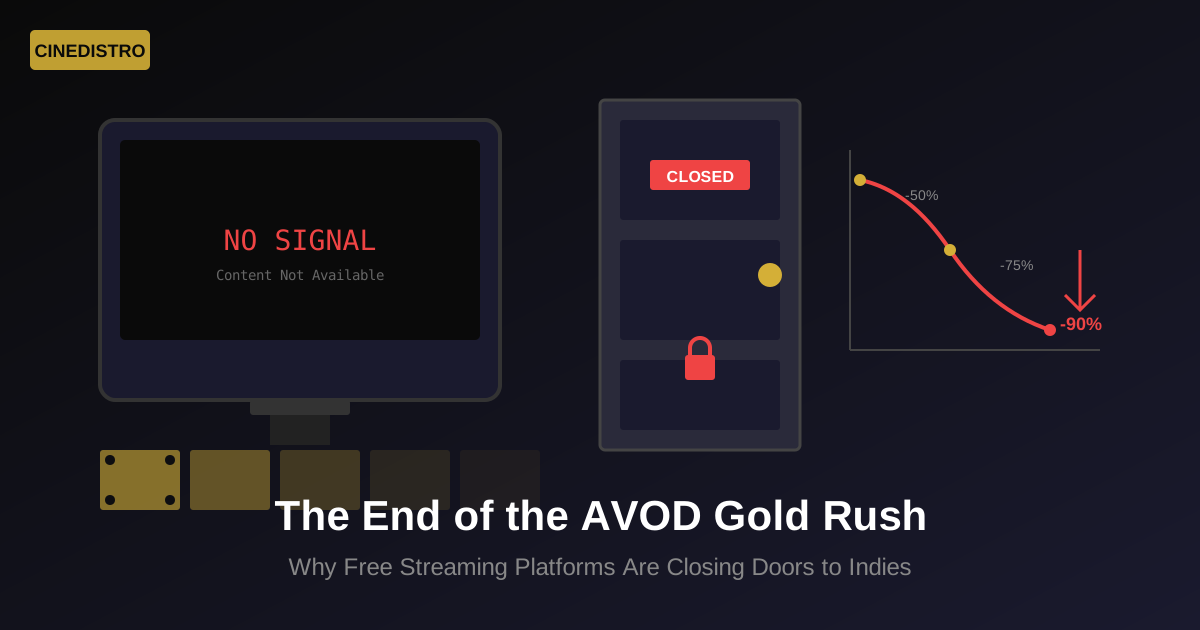
The End of the Tubi Gold Rush: Why Indie Filmmakers Are Being Squeezed Out
For years, Tubi was the indie filmmaker's best friend. The free ad-supported streaming platform offered what felt like a lifeline: a place where your micro-budget horror film or no-name drama could find an audience and actually generate meaningful revenue.
Those days are fading fast.
The Platform Has Changed
When Fox acquired Tubi for $440 million in 2020, it marked the beginning of a transformation. What was once a scrappy platform happy to host "quirky shoestring-budget movies" has evolved into something very different.
Today's Tubi is focused on:
- Original content - "Tubi Originals" with actual budgets and known talent
- Major studio licenses - Blockbusters from NBCUniversal and other major players
- Sports rights - NFL games, Premier League, Liga MX, and more
- Creator programs - Partnerships with digital-first creators like Joey Graceffa and KevOnStage
Notice what's not on that list? Small indie films from unknown filmmakers.
Getting Accepted Has Become Nearly Impossible
As one veteran filmmaker observed: "Contrary to popular belief, you don't simply walk into Tubi. Filmmakers generally get there via Filmhub or through content-seeking programs. It's not an open-door policy."
The gatekeeping has intensified. Platforms like Filmhub—once a reliable path to Tubi—have their own issues and increasingly selective criteria. Many filmmakers report:
- Submissions being rejected without explanation
- Months of waiting with no response
- Films that were previously accepted now being dropped
- Quality thresholds that exclude most micro-budget productions
Tubi now has over 300,000 titles. They don't need your indie film anymore.
Earnings Have Collapsed
Even for filmmakers who did get their films on Tubi during the "golden era," the returns have plummeted. Here's what filmmakers are reporting:
"I got the Q4 royalties for Tubi and it is pretty bleak. The royalties were $119. In the DVD days I would have only had to sell 9 copies to make that much money. I wonder how many thousands of people watched it on Tubi."
The math is brutal:
- CPM rates have dropped - What was $7-9 CPM has fallen to $3-5 in many cases
- Revenue sharing through aggregators - FilmHub takes 20%, then you get what's left
- Visibility has cratered - With 300,000+ titles, your film is buried unless Tubi promotes it
- Quarterly payments - Even small earnings take months to arrive
One filmmaker put it starkly: "With Tubi being the best streaming platform I know of for indie and vintage films, I don't see how small films have much of a fighting chance these days."
The Kickstarter Partnership Isn't What It Seems
In June 2025, Tubi announced a partnership with Kickstarter called the "FilmStream Collective." The headlines made it sound like a new opportunity for indie filmmakers.
The reality is more limited:
- Only 10-20 films will be selected
- You must run a Kickstarter campaign to even be considered
- The "fund" helps with post-production costs—it's not a distribution deal for existing films
- Selected films share advertising revenue, but must be exclusive to Tubi for three months
This isn't a return to the open-door policy of the past. It's a carefully curated program that will help a handful of filmmakers while the vast majority remain locked out.
Where Tubi Is Actually Investing
Follow the money to understand Tubi's priorities:
Sports: NFL games on the platform (including Super Bowl LIX in February 2025), Premier League rights in Mexico and Central America, Liga MX matches, CONCACAF Champions Cup, and more.
Digital Creators: Exclusive content from YouTube and TikTok personalities with built-in audiences.
Major Studio Content: Licensing deals with NBCUniversal and others for recognizable titles.
Original Productions: Tubi Originals with actual marketing budgets.
Your indie film? It's not even on the priority list.
What This Means for Indie Filmmakers
The Tubi gold rush is over. If your distribution strategy relies on getting accepted to Tubi and earning meaningful revenue there, you need a new plan.
The uncomfortable truth is that AVOD platforms have matured past the point where they need indie content to fill their catalogs. They've graduated to bigger, shinier things.
The YouTube Alternative
While Tubi closes doors, YouTube is opening them. Consider the differences:
| Factor | Tubi | YouTube via CineDistro |
|---|---|---|
| Acceptance | Highly selective, no direct submissions | Open submissions with quality review |
| Transparency | Minimal - data through aggregators only | Full real-time analytics |
| Revenue Share | Unknown % minus aggregator cut | 80% to filmmaker |
| Platform Growth | Growing but pivoting away from indie | TV viewing exploding, #1 streaming platform |
The era of easy Tubi money is over. Smart filmmakers are looking for the next opportunity—and finding it on the world's largest video platform.
Ready to Distribute Your Film?
Join CineDistro and reach millions of viewers on YouTube. No upfront fees, 80% revenue share, full transparency.
Submit Your Film →