
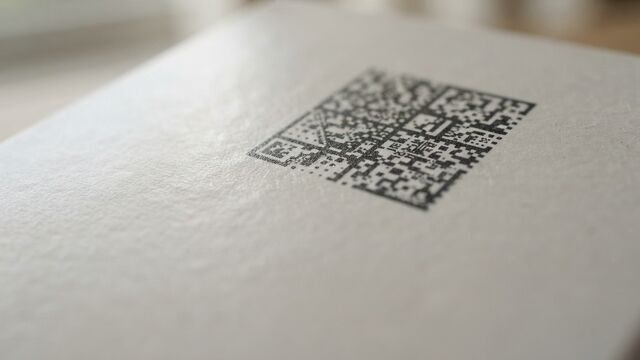
Crime Stories - Copy detection patterns: microscopic codes guarding physical goods
Crime Stories · 0:40 · Technology ·
Modern anti-counterfeiting relies heavily on digital graphics known as copy detection patterns. These compact digital images consist of pseudo-random patterns printed directly on product packaging, labels, or valuable documents. When scanned by a standard smartphone camera or an image scanner, the pattern verifies whether an item is genuine or a fraudulent reproduction. The micro-images can also be embedded directly into two-dimensional barcodes, simultaneously connecting consumers to supply-chain traceability data and product details during authentication.
Source: Wikipedia
More videos
- Crime Stories - George Waightman: the cowboy who joined the Doolin-Dalton gang 0:36
- Crime Stories - Void pantographs: hidden patterns fighting paper document forgery 0:41
- Crime Stories - Madonna of the Yarnwinder: Leonardo's evolving masterpiece 0:40
- Crime Stories - Jesse James: separating the myth from the outlaw 0:35
- Crime Stories - En Canot: the lost Cubist masterpiece by Jean Metzinger 0:40
- Crime Stories - Tom Folliard: Billy the Kid's closest companion 0:35
- Crime Stories - Harvey Logan: the wildest gunman of the Wild Bunch 0:36
- Crime Stories - Johnny Gilbert: the demise of a colonial bushranger 0:36
- Crime Stories - The Potato Eaters: Vincent van Gogh's renowned Dutch masterpiece 0:32
- Crime Stories - The Pioneer Square totem pole: Seattle's historic landmark 0:34
- Crime Stories - Love and Pain: Edvard Munch's haunting series of embraces 0:36
- Crime Stories - Young Woman with a Lapdog: Rembrandt's evolving late portrait 0:40