
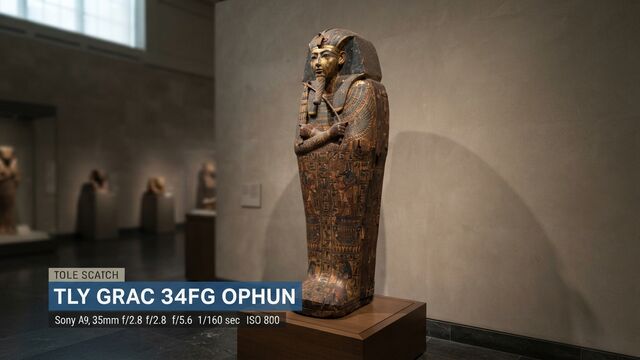
Egyptology - Ancient Egyptian coffins: elite vessels for eternal transformation
Egyptology · 0:38 · Ancient Egypt ·
During the Pharaonic era, coffins were not mere funerary containers, but sacred portals meant to protect and transform the dead. Because of their cost, fewer than five percent of ancient Egyptians could afford their own coffin, while poorer individuals were wrapped in linen or palm ribs. Coffins were crafted in rectangular or anthropoid shapes, primarily using imported Lebanese cedar for the highest elites, or local sycomore fig. Royalty even utilized nested layers, such as the triple coffins guarding Tutankhamun.
Source: Wikipedia
More videos
- Egyptology - Mortuary Temple of Seti I: sacred stop in Thebes 0:35
- Egyptology - Meresamun: the temple singer scanned across three decades 0:49
- Egyptology - Mastaba S3035: First Dynasty tomb at Saqqara 0:45
- Egyptology - The Serapeum of Saqqara: underground vault of sacred bulls 0:40
- Egyptology - Lady Rai: the mummy with ancient heart disease 0:38
- Egyptology - Gerf Hussein: the ancient Nubian temple divided by water 0:36
- Egyptology - Shep-en-hor: an ancient Egyptian woman's Glasgow journey 0:37
- Egyptology - Abu Simbel: Ramesses II's rock-cut wonder saved from floodwaters 0:36
- Egyptology - Tomb KV57: Horemheb's royal resting place in the Theban valley 0:37
- Egyptology - Tell er-Retaba: a Delta fortress and Ramesses temple 0:40
- Egyptology - Mastaba of Kanefer: elite burial beside the Great Pyramid 0:37
- Egyptology - Maa Kheru: the ancient Egyptian judgment of truth 0:41