
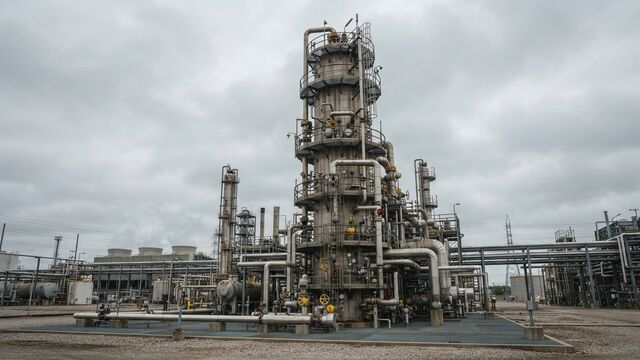
Inventions - The Girdler sulfide process: extracting heavy water from nature
Inventions · 0:44 · Chemistry ·
The Girdler sulfide process is an industrial technique invented independently in 1943 by Karl-Hermann Geib and Jerome S. Spevack to extract heavy water from natural water. The method swaps hydrogen isotopes between hydrogen sulfide and ordinary water across several energy-intensive steps. Heavy water is needed to cool and moderate heavy water nuclear reactors and for particle research. Canada's former Bruce plant, once the world's largest, used this process, consuming three hundred forty thousand units of feed water to yield just one unit of heavy water.
Source: Wikipedia
More videos
- Inventions - KHR-1: the accessible bipedal humanoid robot 0:41
- Inventions - Blu-ray: the high-definition disc that replaced DVD 0:42
- Inventions - Jialiang: the ancient bronze vessel that standardized Chinese measures 0:42
- Inventions - Ion lasers: brilliant beams with high thermal costs 0:45
- Inventions - The Pendolino: curving fast without new tracks 0:43
- Inventions - Vega: Europe's compact satellite workhorse 0:41
- Inventions - The Chopin alveograph: testing flour by bursting bubbles 0:36
- Inventions - The cupola furnace: melting foundry iron with fire 0:36
- Inventions - Sandblasting: high-pressure abrasives reshaping industrial surfaces 0:41
- Inventions - Meat alternatives: from ancient tofu to engineered cellular proteins 0:41
- Inventions - Video game consoles: dedicated hardware built for living room play 0:40
- Inventions - Mechanical organs: self-playing instruments driven by wheels and rolls 0:42